India Postal Map & Zone Visual Guide
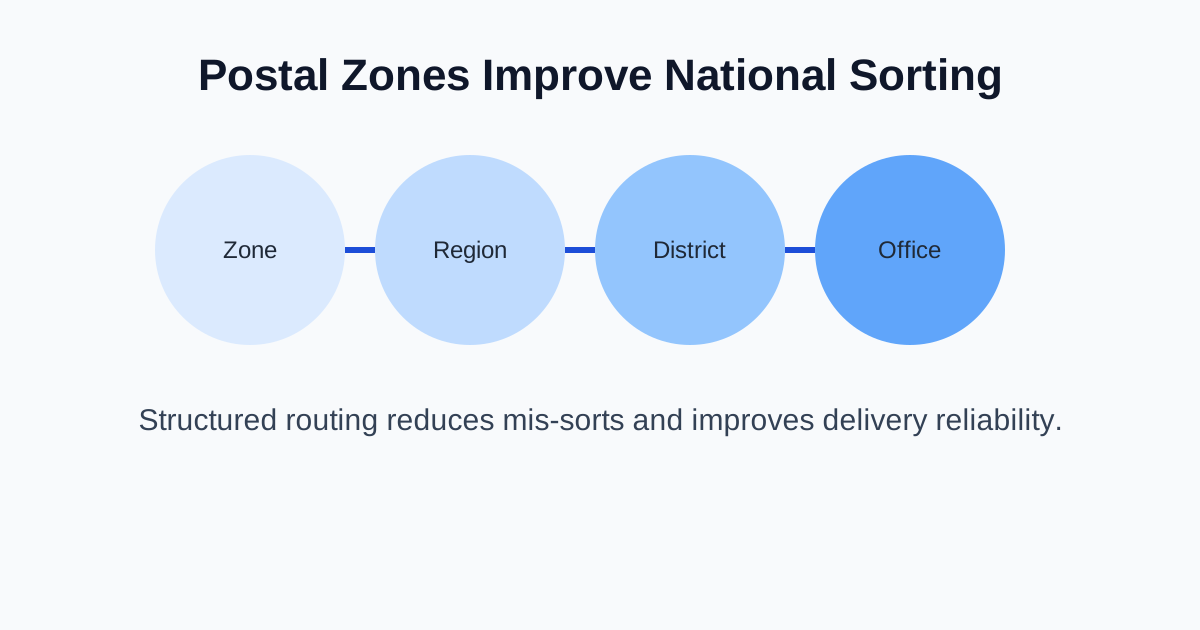
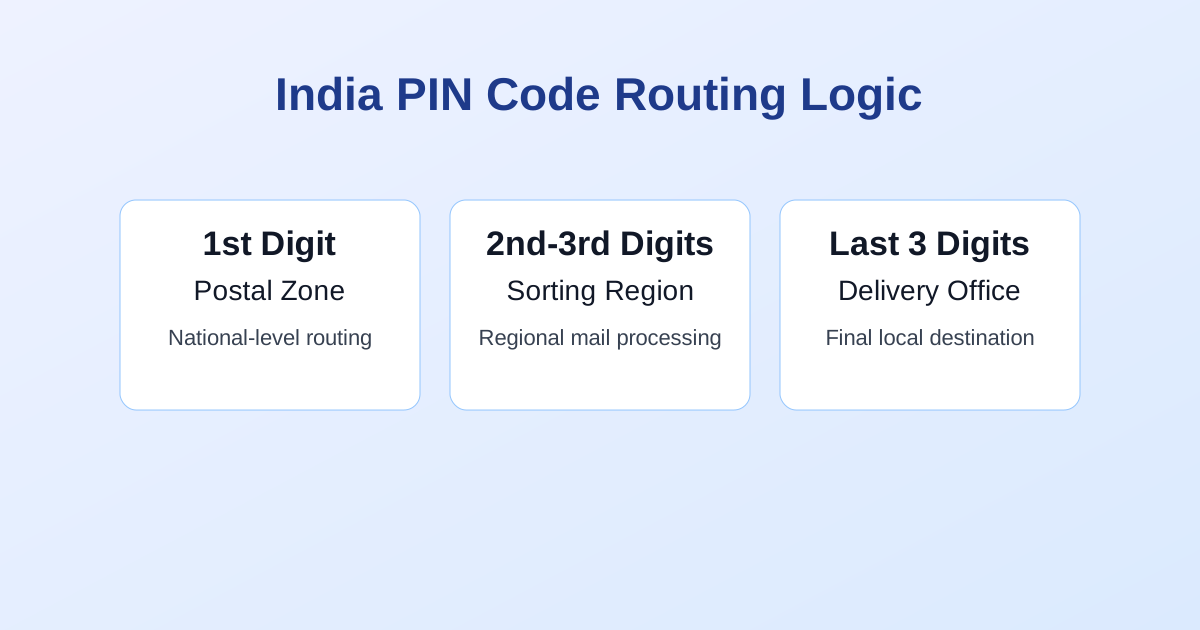
Explore how India Post routing works with visual references. These graphics help users understand zone digits, sorting districts, and last-mile office mapping before they search by pincode.
India has millions of delivery points, so remembering every locality PIN is not practical. This interface combines lookup tools and guidance in one workspace for faster discovery.
You can search by 6-digit PIN directly or browse by state, district, and post office. The backend APIs and result rendering logic are retained exactly as before.
The right-side knowledge rail connects users to existing internal pages, helping visitors continue to verified policy, informational, and regional postal resources.
Explore how India Post routing works with visual references. These graphics help users understand zone digits, sorting districts, and last-mile office mapping before they search by pincode.
To serve millions of monthly users, this section focuses on practical postal needs: delivery checks, city-level pincode discovery, and India Post knowledge pages.
Ad Space
Ad Space
Have bulk postal data, a logistics partnership idea, or want city-specific landing pages? We actively collaborate on utility-first postal products.
Contact Team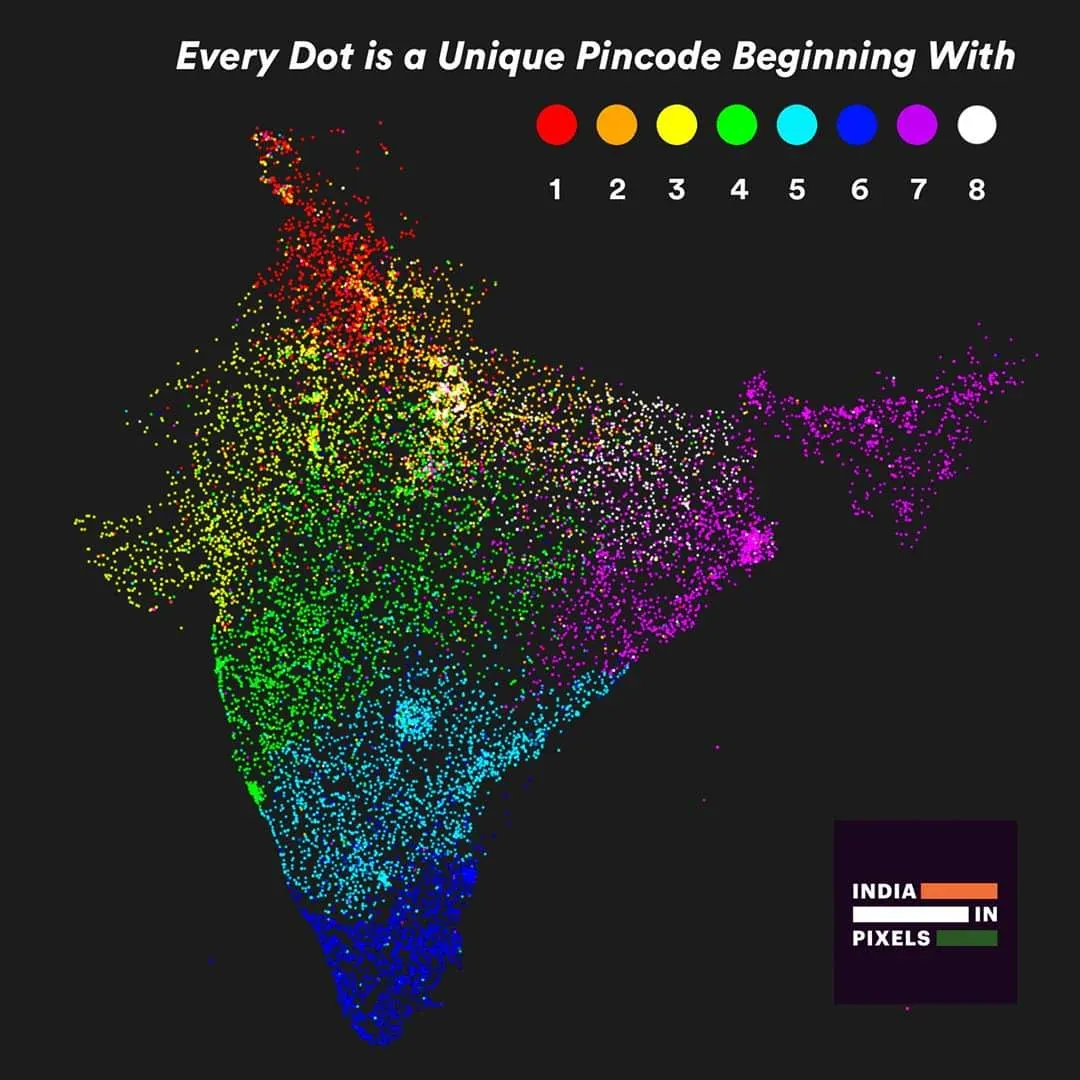
This India pincode dot map is designed as a practical reading aid for people who need to make quick location decisions, not just a decorative visual. Every dot hints at how postal identity travels from national sorting logic to local delivery routes, and that makes the graphic valuable for buyers, sellers, support teams, and operations planners alike. When users look at plain text pincode lists, they often miss pattern relationships between neighboring districts, corridor towns, and edge regions where service speed can differ. A map view closes that gap instantly because it gives structure to what would otherwise be scattered numbers. The map encourages users to think in flows: where mail enters a zone, where it branches, and where it reaches the final office. This is especially useful when a person is validating delivery promises, onboarding new addresses, or auditing service coverage across multiple cities at once. In that sense, the graphic is not replacing search, but strengthening search. It gives context before the query, confidence during the query, and interpretation after the result appears, which is exactly what a postal intelligence surface should do for high-intent users. It also helps teams compare seasonal demand clusters, understand corridor pressure, and plan realistic delivery communication instead of relying on broad assumptions across diverse postal geographies and customer expectations. Another reason this map matters is trust. Users tend to trust systems that explain themselves, and visual context is one of the fastest ways to create that explanation. A person checking a pincode for banking KYC, insurance forms, school admissions, or courier dispatch is often under time pressure and cannot afford ambiguity. By placing this map before the intelligence section, the page now tells a clear story: first understand national distribution, then move into deeper postal insights and actions. That sequencing reduces cognitive load because people see the big picture before reading metrics and feature blocks. It also supports better decision quality in borderline cases, such as addresses near district boundaries, newly expanded municipal zones, or similar locality names across states. When users see India as a connected postal field rather than isolated records, they are less likely to assume that one successful delivery proves all neighboring locations are equally serviceable. Instead, they develop healthier verification behavior: check pincode, confirm post office, compare district, and then proceed. Over time, that behavior lowers failed shipments, fewer return-to-origin events, and less support friction for businesses. A simple graphic can therefore create measurable operational benefits when positioned correctly and explained with purpose. From an educational perspective, the dot map also helps decode the six-digit PIN system in a way text alone cannot. The first digit indicates region, the second narrows the sub-region, and the third points to sorting district context, while the final three digits identify the destination office. Many users memorize this sequence abstractly but still struggle to apply it when comparing addresses across unfamiliar geographies. With the map beside them, the idea becomes tangible: they can imagine how one digit shift may move mail into a different processing lane even if place names sound nearby. That understanding is critical for marketplaces and fulfillment teams managing thousands of orders where small addressing errors multiply into real costs. It is equally important for residents in rapidly changing peri-urban belts, where legacy locality naming and new administrative updates can overlap. By combining the dot map with searchable records, the page acts like a practical classroom: visual orientation first, exact verification second, execution third. This layered model supports beginners and power users at the same time. Beginners gain confidence through pattern recognition, while experienced users get faster triage when comparing high-volume address lists. Finally, this map should be read as a living context panel, not a fixed claim about real-time transport conditions. Postal performance can shift due to weather, festival load, infrastructure work, and local operational constraints, so no single visual should be treated as a guarantee. The right way to use this section is as a strategic compass: identify probable coverage direction, understand relative spread, and then validate the exact pincode and office through the lookup pathways on this site. That approach protects users from overconfidence while still giving them speed. It also aligns with responsible information design, where visuals guide interpretation but detailed data confirms action. By adding the India pincode dot map before the Intelligence Desk, the homepage now balances narrative, orientation, and utility in a single flow. Users can move from macro awareness to micro verification without jumping across disconnected pages, which improves continuity and makes the platform feel purpose-built for real postal tasks. Whether someone is sending a single personal parcel, managing enterprise dispatch, or researching regional service access, this section provides a unique, human-readable context layer that turns postal data into practical decision support.
Built for scale: discover postal data for metro cities, fast-growing districts, and high-commerce corridors through one search experience.
Know our mission and data coverage.
Data SourceHow postal data is sourced and updated.
Contact & CorrectionsReport updates or postal data issues.
Use the PIN search box for direct checks, or choose State → District → Post Office to confirm the final delivery office.
Yes. A single pincode may include multiple branch/sub offices depending on delivery routes and administrative structure.
Logistics partners use pincodes for serviceability, ETA calculation, warehouse mapping, and preventing failed deliveries.
Absolutely. Accurate pincode-office mapping helps avoid rejection in KYC, insurance, and government documentation.